
Pregnancy and maternity research measures reported experiences, while tribunal records measure legal claims. This guide distinguishes the latest 2026 independent survey from the older government study and explains the current legal timetable. Results from different studies are not a direct trend series.
Key facts and figures
- Nearly 3 in 4 mothers in the weighted PTS survey reported pregnancy or maternity discrimination (2026).
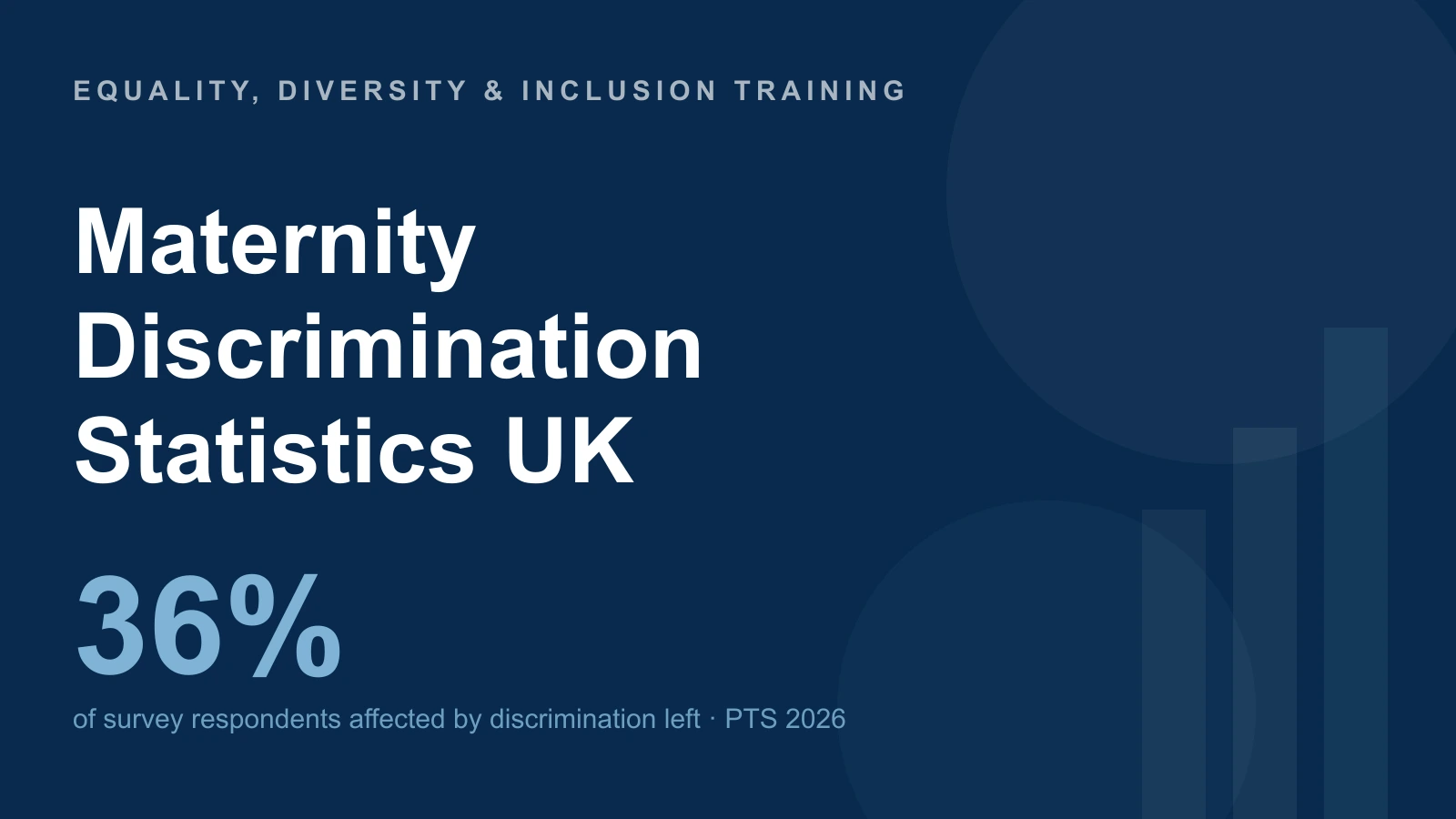
- 36% of mothers reporting discrimination in that survey left their job (PTS, 2026).
- Fewer than 1 in 30 affected mothers took legal action (PTS, 2026).
- 24% of pregnant employees in the survey reported receiving no pregnancy risk assessment (PTS, 2026).
- 77% reported a negative or possibly discriminatory experience in the older BIS/EHRC study (2016).
- 11% felt forced out of their job in the BIS/EHRC study (2016).
- 59% of surveyed private-sector employers supported pregnancy disclosure during recruitment (EHRC/YouGov, 2018).
- 5,245 women took part in the early-2026 PTS survey; results were weighted.
Reviewed on 15 October 2026. These are reported experiences and attitudes, not counts of proven unlawful acts. Studies differ in questions, sampling and reference periods.
How many women lose their jobs because of pregnancy or maternity?
The 2026 Pregnant Then Screwed and Women in Data report found that 36% of mothers who reported discrimination left their job. That denominator is affected mothers in the survey, not all mothers or all employees. It is not an annual national count of dismissals.
The older BIS/EHRC research, published in 2016, found that 11% felt forced out. Its population extrapolation was up to 54,000 mothers a year at that time. The study interviewed 3,254 mothers and 3,034 employers.
Different questionnaires and sampling methods mean these studies cannot establish a precise percentage increase in job loss across the decade. Leaving an employer, being dismissed and leaving the workforce are also different outcomes.
What percentage of mothers experience pregnancy or maternity discrimination?
PTS’s State of the Nation 2026 reported that nearly three quarters of surveyed mothers experienced pregnancy or maternity discrimination. It surveyed 5,245 women online in early 2026 and weighted responses by region and social grade, with additional weighting for certain family and disability groups.
The 2016 BIS/EHRC research found 77% reported a negative or possibly discriminatory experience. Its broader wording matters: neither figure is a tribunal finding, and they should not be presented as a like-for-like time series.
In the 2026 survey, 24% of pregnant employees reported receiving no pregnancy risk assessment. Employers should follow the applicable health and safety assessment duties, rather than treating a survey result as proof of compliance in an individual workplace.
How do the 2016 and 2026 studies compare?
There is no single official annual series measuring the prevalence of maternity discrimination. The 2016 government research and the 2026 independent survey answer related questions using different methods. Dates and denominators are retained below.
| Measure | Figure | Research / scope |
|---|---|---|
| Reported pregnancy or maternity discrimination | Nearly three quarters | PTS / Women in Data, 2026 mothers surveyed |
| Left job after discrimination | 36% | PTS 2026; mothers reporting discrimination |
| Took legal action | Fewer than 1 in 30 | PTS 2026; mothers reporting discrimination |
| Reported no pregnancy risk assessment | 24% | PTS 2026; pregnant employees surveyed |
| Negative or possibly discriminatory experience | 77% | BIS/EHRC study published 2016 |
| Felt forced out of job | 11% | BIS/EHRC study published 2016 |
| Harassment or negative comments | 1 in 5 | BIS/EHRC 2016; pregnancy or flexible-working related |
What do employers think about pregnancy at work?
In the EHRC’s 2018 YouGov survey of private-sector decision-makers, 59% agreed that applicants should disclose pregnancy and 36% thought it reasonable to ask about future plans for children. These are historical survey attitudes, not current rates across all employers.
Recruitment should assess suitability for the job. Unfavourable treatment because of pregnancy, or sex discrimination based on assumptions about future parenthood, can be unlawful. These legal questions are separate from how common a belief was in the survey.
How many women take legal action over maternity discrimination?
The 2026 PTS report said fewer than one in 30 mothers who experienced discrimination took legal action. “Legal action” should not be relabelled as a verified count of employment tribunal claims.
In Great Britain, most tribunal claims concerning problems before 1 October 2026 have a time limit of three months minus one day; for problems on or after 1 October 2026, most have six months minus one day. Notify Acas within the applicable limit. Timely early conciliation can pause it, but an internal grievance does not.
Different claims and continuing conduct can complicate the deadline. Acas or an adviser can explain the relevant process. Our workplace discrimination statistics guide covers tribunal records, whose counts are distinct from survey prevalence.
What legal protections exist — and what changes in 2027?
In Great Britain, the Equality Act 2010 protects against unfavourable treatment because of pregnancy and maternity in the circumstances covered by the Act. Pregnancy-related dismissal can also be automatically unfair. Northern Ireland has separate legislation.
Since April 2024, eligible employees have extended priority for a suitable alternative vacancy in a redundancy exercise. Pregnancy protection starts when the employer is told, and maternity-related protection can continue until 18 months after birth. This is not an 18-month total window starting at notification, and it is not a blanket ban on genuine redundancy.
Further Employment Rights Act 2025 dismissal protections are scheduled for 2027. They should not be described as already applying on this article’s review date. The precise rights depend on the legislation and commencement rules in force.
Frequently asked questions
How many mothers lose their jobs because of pregnancy or maternity?
There is no verified current annual count in these sources. PTS’s 2026 survey found 36% of mothers reporting discrimination left their job. The 2016 government study estimated up to 54,000 mothers felt forced out annually at that time.
How common is pregnancy or maternity discrimination?
Nearly three quarters of mothers in the weighted 2026 PTS survey reported it. The 2016 BIS/EHRC study used a different question and found 77% had a negative or possibly discriminatory experience.
Can someone be made redundant while pregnant or on maternity leave?
Genuine redundancy can occur, but pregnancy or maternity must not be the reason for selection. Eligible employees have priority for suitable alternative vacancies during the relevant protected period.
How many affected mothers take legal action?
Fewer than one in 30 in the 2026 PTS report. This describes reported legal action rather than an administrative tribunal-claim total.
How often are maternity discrimination statistics updated?
There is no single official annual prevalence series. This guide distinguishes the 2016 government study from independent research published in 2026.
Related guides
- Workplace Discrimination Statistics UK: Tribunal Claims & Prevalence
- Shared Parental Leave Statistics UK
- Menopause in the Workplace Statistics UK
- Women in Leadership Statistics UK
- The Nine Protected Characteristics Under the Equality Act 2010
- Equality Act 2010: The Complete UK Guide
Sources & references
- Pregnant Then Screwed / Women in Data: State of the Nation 2026, report and methodology
- BIS/EHRC: pregnancy and maternity research, final reports, 2016
- EHRC: pregnancy research and 2018 employer attitudes
- Acas: redundancy protection for pregnancy and new parents
- Acas: tribunal time limits, updated 1 October 2026
- Government: pregnant employees’ rights
- Government: implementation dates for further dismissal protections
Make sure your managers understand pregnancy and maternity rights — and never become one of these statistics.
Explore the Equality, Diversity & Inclusion course →
Mark writes about equality, diversity and inclusion, UK workplace compliance and accredited online training for Equality, Diversity & Inclusion Training, part of Online CPD Academy.