
Unpaid caring can affect working hours, job choices and the ability to remain in employment. This guide brings together census evidence, current Carers UK polling and clearly dated surveys, and explains the statutory leave right in Great Britain. The sources use different definitions, so their figures are presented separately.
Key facts and figures
- 2.9 million people combined paid employment and unpaid care in UK census figures compiled by Carers UK; this excludes full-time students.
- 62% vs 75% employment rates for working-age carers and non-carers in WPI Economics’ research reported in 2025.
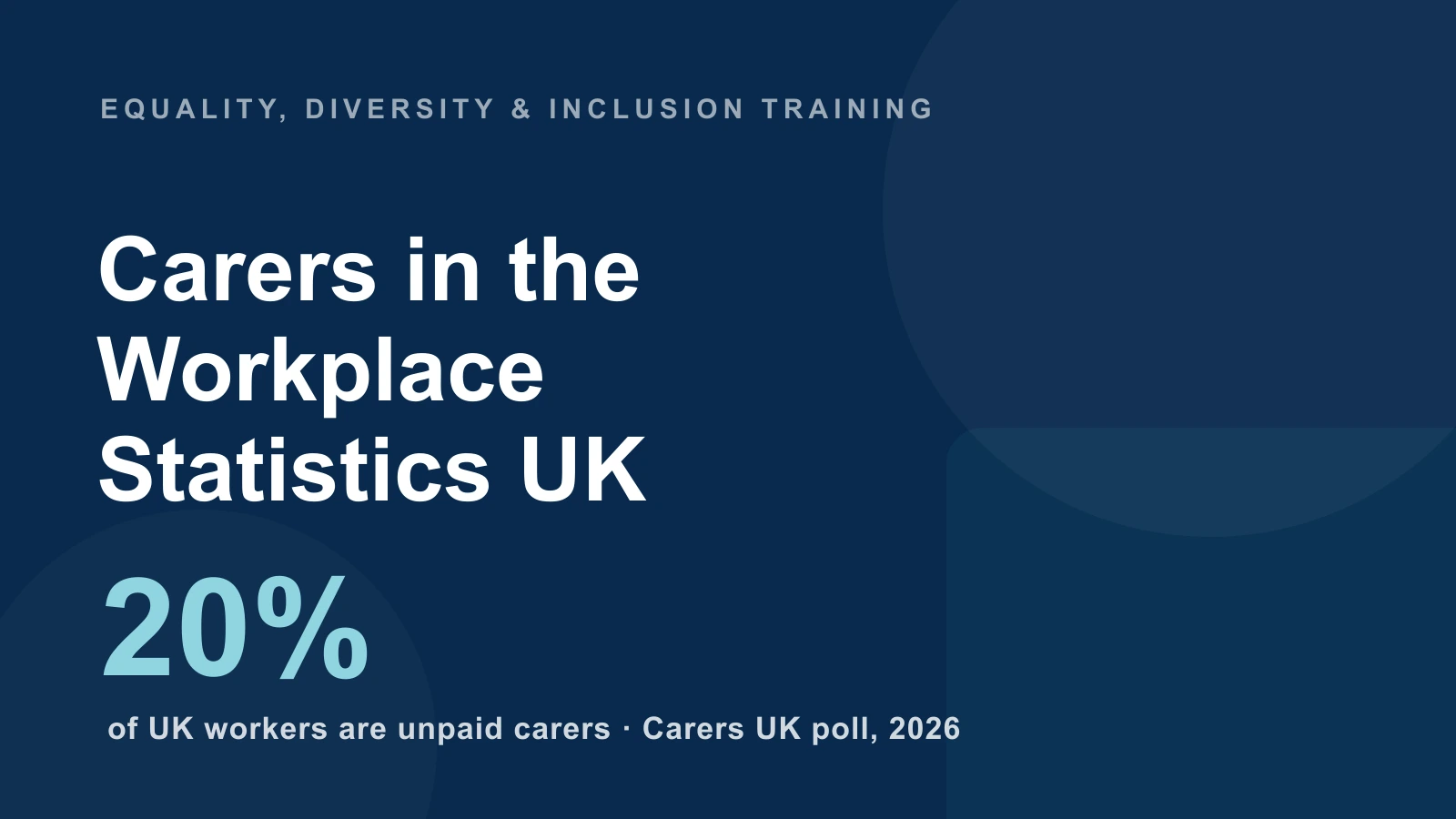
- 1 in 5 workers provided unpaid care in Carers UK’s September 2026 polling, an estimate of 6.7 million people.
- 1,500 a day is the approximate daily equivalent of an estimated 1.1 million people leaving work to care over the previous two years, from 2026 polling.
- 3.33 million people were estimated to have given up work to care at some point, in Carers UK’s 2026 polling.
- 36% of working carers in University of Sheffield research reported turning down or not applying for a job or promotion because of caring in the previous year.
- One working week of unpaid carer’s leave per 12 months is a day-one employee right in Great Britain; its length depends on the employee’s usual working week.
- £37 billion estimated annual lost output associated with working-age carers unable to work while caring for working-age people, using 2022 inputs in DWP’s 2025 model.
Reviewed 15 October 2026. Census results, population polling, self-selecting carer surveys and employer surveys answer different questions. Their estimates should not be combined into a single count or trend.
How many carers are in employment in the UK?
Carers UK’s September 2026 facts briefing compiles approximately 2.9 million employed unpaid carers across UK census results. England and Wales were counted in 2021 and Scotland in 2022; this is not a fresh 2026 census. The employment total excludes full-time students.
The September 2026 Opinium polling gives a different estimate: one in five workers providing unpaid care, equivalent to 6.7 million people. Definitions, questions and collection dates differ from the census, so the difference cannot be treated as growth since census day.
| Measure | Figure | Source / period |
|---|---|---|
| Employed unpaid carers, UK | About 2.9 million | Census compilation; England/Wales/NI 2021, Scotland 2022; excludes full-time students |
| Workers providing unpaid care | 20% / estimated 6.7 million | Carers UK polling, 2026 |
| People leaving work to care in previous two years | Estimated 1.1 million | Carers UK polling, 2026 |
| Managers, directors and senior officials providing care | Over 317,000 | England and Wales Census 2021 |
| Employed carers working part time | 38%; non-carers 29% | England and Wales Census 2021 |
Are working carers less likely to be employed than non-carers?
WPI Economics’ research reported for Carers Week 2025 found employment rates of 62% for working-age carers and 75% for non-carers: a 13-percentage-point difference. This is a comparison between populations, not proof that caring alone caused every difference.
Caring is not itself one of the Equality Act’s nine protected characteristics. A person may nevertheless be protected from direct discrimination because of their association with someone who has a protected characteristic, such as disability. The application depends on the facts; it is not the same as a general reasonable-adjustment duty owed to every carer.
How many people give up work to care each year?
Carers UK’s September 2026 polling estimates that 1.1 million people left paid work to care during the previous two years, equivalent to roughly 1,500 a day. Its comparable 2019 polling estimated about 600 a day. These are estimates from polling and extrapolation, not a daily administrative register.
The same 2026 research estimates that 3.33 million people have given up work to care at some point. Keeping the two-year and lifetime measures separate avoids counting them as the same annual flow. Census 2021 data for England and Wales also shows that 38% of employed carers worked part time, compared with 29% of employed non-carers.
How does caring affect careers and productivity?
University of Sheffield research summarised by Carers UK found that 36% of working carers had turned down a job or promotion, or not applied, because of caring in the previous 12 months. This measure includes different decisions and should not be presented as a dismissal rate.
Among employee respondents to State of Caring 2025, 69% said they had not focused on their career as much as they wanted and 61% said caring had affected the type of employment they took. The survey was self-selecting: these percentages describe respondents, not all UK carers.
In the same survey, 64% of employee respondents reported difficulty concentrating or being as productive as they wanted. The finding supports discussing practical barriers, but does not establish a guaranteed financial return from a particular workplace initiative.
What is the Carer's Leave Act 2023 and how much leave does it give?
Since 6 April 2024, eligible employees in Great Britain have a day-one right to up to one working week of unpaid carer’s leave in each 12-month period for a dependant with a long-term care need. A week follows the person’s usual working pattern: it is three days for someone who usually works three days, not automatically five days.
Leave can be taken in half-days, days or a week. An employee does not receive a separate week for each dependant. Employers may provide more generous paid leave, but the statutory right remains unpaid as of this review. Proposals for paid leave are separate from the law currently in force.
How are employers responding to the Carer's Leave Act?
The 2026 Employers for Carers report received responses from 117 employers across England, Scotland and Wales; some questions had fewer respondents. It was promoted through employer and carer networks, so it does not represent a random sample of all businesses.
The findings below describe support among those responding organisations. They should not be read as national uptake rates or as a direct comparison with differently recruited earlier surveys.
| Employer measure, 2026 survey | Figure |
|---|---|
| Dedicated process for employees to identify as carers | 59% |
| Health and wellbeing support specifically for carers | 49% |
| Monitoring use of paid and/or unpaid carer’s leave | 61% |
What does carers leaving work cost the economy?
DWP’s model published in March 2025 estimates £37 billion in annual lost output associated with working-age carers who cannot work because they care for working-age people. It uses 2022 inputs and an estimated 544,000 carers within that definition. It is not a count of all carers or a bill incurred by employers.
The value of unpaid care, forgone earnings, lost output and fiscal effects are different concepts. Estimates made on different bases should not be added together or described as interchangeable measures of the cost of caring.
Frequently asked questions
How many carers are in employment in the UK?
Carers UK’s census compilation gives approximately 2.9 million, excluding full-time students. Its 2026 polling estimates 6.7 million workers providing unpaid care; the methods and dates differ.
How many people give up work to care each year?
The 2026 poll estimates 1.1 million over the preceding two years, roughly 1,500 a day. That is a two-year estimate expressed as a daily average, not a directly observed annual count.
How much statutory carer’s leave is available?
Eligible employees in Great Britain can take one usual working week of unpaid leave per 12 months from day one. It is not always five days and is not multiplied by the number of dependants.
Are working-age carers less likely to be employed?
The WPI research reported in 2025 found 62% in employment compared with 75% of non-carers. The populations and research period should accompany the comparison.
How many employers support carers?
In the 2026 Employers for Carers survey, 49% of responding organisations offered carer-specific health and wellbeing support. The survey is not representative of every UK employer.
What does carers leaving work cost the economy?
DWP’s £37 billion model estimates lost output for a specific group of working-age carers using 2022 inputs. It should not be presented as the value of all unpaid care or an employer-only cost.
Related guides
- Disability Employment Gap Statistics UK
- Menopause in the Workplace Statistics UK
- Women in Leadership Statistics UK
- Workplace Discrimination Statistics UK
- Equality Act 2010: The Complete UK Guide
Sources & references
- Carers UK: Facts about carers, September 2026
- Carers UK: Balancing work and unpaid care, September 2026
- Carers UK: September 2026 polling results and comparison with 2019
- Employers for Carers: Supporting carers at work, 2026 employer survey
- GOV.UK: unpaid carer’s leave
- Acas: direct discrimination, including association
- DWP: cost of working-age ill health and disability preventing work, March 2025
Carers make up around one in seven of your workforce — make sure your managers understand carer’s leave, associative discrimination and how to support them under the Equality Act 2010.
Explore the Equality, Diversity & Inclusion course →
Mark writes about equality, diversity and inclusion, UK workplace compliance and accredited online training for Equality, Diversity & Inclusion Training, part of Online CPD Academy.